Iris Schmidt · 22 October 2026
The Evolution of Workflow Automation in Boutique Online Business Ecosystems
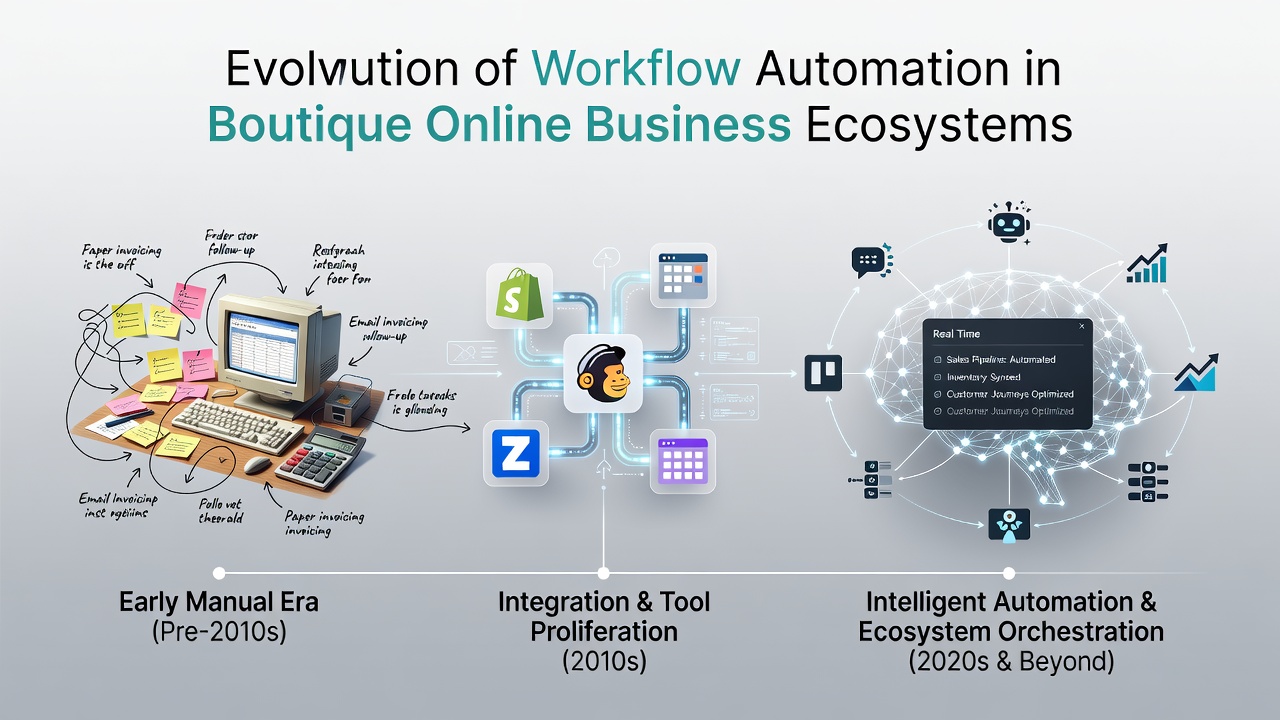
Smaller online retailers operating in specialized niches began adopting workflow automation during the early 2000s as basic software platforms emerged to handle repetitive tasks such as order processing and inventory tracking, and these initial systems connected directly to e-commerce storefronts without requiring extensive custom coding. Boutique businesses, which typically manage unique product lines and smaller customer bases, found that early automation reduced manual data entry errors while freeing staff time for product curation and supplier negotiations.
Initial Adoption Patterns in Niche Markets
Researchers documented how independent sellers on platforms like Etsy and Shopify first experimented with simple scripts that synchronized product listings across multiple channels, yet the real acceleration occurred when cloud-based services introduced no-code interfaces around 2012. Data from industry reports shows that adoption rates among businesses with under 50 employees climbed steadily through the decade, driven by integrations that linked email marketing sequences to sales notifications and shipping label generation. Observers note that these tools allowed boutique operators to maintain consistent customer experiences even during seasonal spikes without hiring additional personnel.
Expansion Through API Connectivity
By the late 2010s workflow systems had evolved to incorporate third-party application programming interfaces that pulled real-time data from payment processors, logistics providers, and social media analytics dashboards, and this connectivity created seamless pipelines where a single customer action could trigger inventory updates, personalized follow-up messages, and supplier reorders. Studies from academic institutions in Canada and Europe indicate that businesses utilizing these layered automations reported measurable reductions in order fulfillment times, often cutting processing from days to hours. One case highlighted by analysts involved a specialty apparel retailer that combined customer preference data with automated restocking alerts, resulting in fewer stockouts during peak periods.
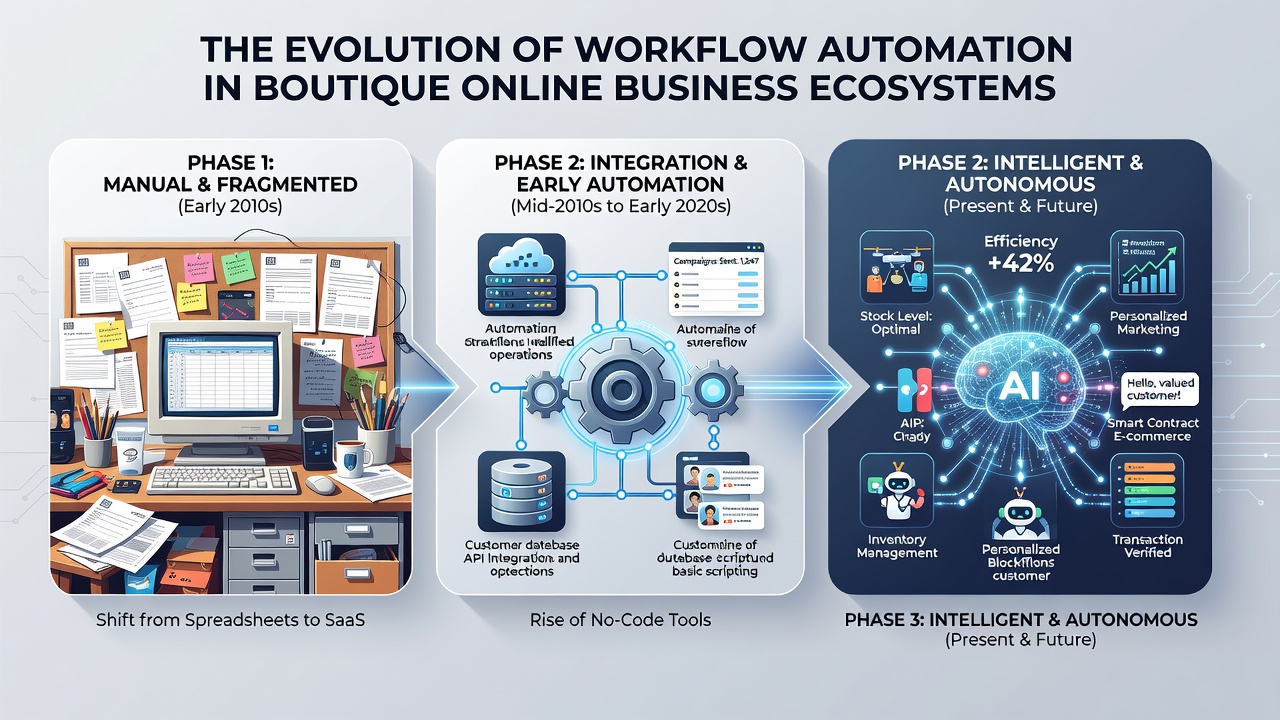
What's interesting is how these connections scaled further when artificial intelligence modules began analyzing purchasing patterns to predict demand fluctuations, and such predictive capabilities proved especially valuable for businesses dealing with perishable or trend-sensitive goods. Figures from the OECD digital economy reports reveal consistent growth in automation uptake across OECD member countries between 2018 and 2024, with boutique segments showing particular gains in customer retention metrics tied to timely communications.
Developments Around October 2026
As of October 2026, workflow platforms have incorporated enhanced compliance modules that automatically adjust processes to align with updated data protection regulations across multiple jurisdictions, and boutique operators now benefit from built-in audit trails that document every automated step for regulatory reviews. Recent statistics compiled by the Australian Bureau of Statistics demonstrate that small online enterprises adopting these updated systems experienced average efficiency improvements of 28 percent in back-office operations compared with manual methods. Experts tracking these trends point to the integration of voice-activated controls and mobile-first dashboards as factors that lowered the technical barrier for non-technical founders managing day-to-day workflows.
Additional layers now include cross-platform inventory synchronization that prevents overselling when products appear on both owned websites and marketplace channels, while conjunctions with financial software automatically reconcile payments and flag discrepancies for review. Those who've implemented these features report smoother cash flow management because reconciliation happens continuously rather than at month-end. Research indicates that the combination of machine learning for fraud detection and automated tax calculation has become standard in leading boutique ecosystems, reducing exposure to compliance issues that previously required dedicated accounting staff.
Impact on Operational Scale and Resource Use
Boutique online businesses have leveraged automation to expand product ranges and geographic reach without proportional staff growth, and this pattern appears across categories from artisanal foods to custom jewelry. Data compiled through longitudinal studies shows that teams using end-to-end automated pipelines allocate more hours to creative and strategic activities rather than repetitive administrative work. Observers note that supplier relationship management has also improved through automated purchase order generation and performance tracking that highlights reliable partners based on delivery metrics.
Yet challenges persist around initial setup costs and the need for ongoing maintenance of integrations when underlying APIs change, although newer platforms offer monitoring alerts that notify users of required updates before disruptions occur. Government analyses from various regions, including work by Statistics Canada on digital adoption, confirm that businesses investing in training alongside automation tools achieve higher long-term returns than those focusing solely on software deployment.
Conclusion
The progression of workflow automation in boutique online business ecosystems reflects steady technological refinement that addresses the specific constraints of smaller operations, from early task-specific scripts to today's interconnected platforms capable of handling complex multi-channel activities. Continued evolution appears tied to advances in predictive analytics and regulatory alignment features that keep pace with global commerce requirements. Those monitoring the sector expect further refinements in accessibility and interoperability as more specialized tools enter the market.